
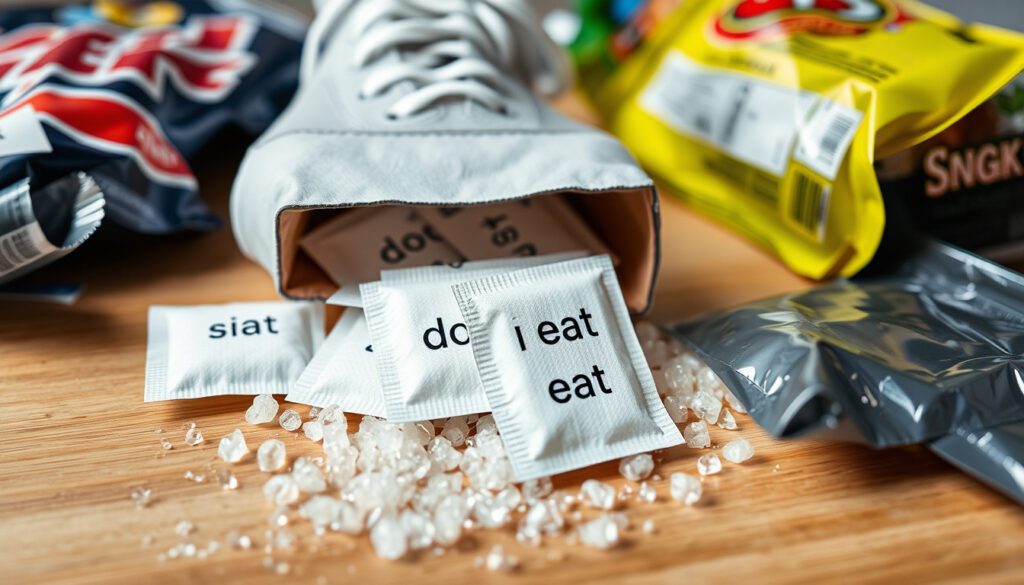
Most people have found a small paper packet tucked inside a shoe box or a bag of electronics. Poison Control centers in the United States receive roughly 50,000 desiccant exposure calls each year, and most involve children under age five.
Primary function: absorbs moisture ·
Common packaging: paper envelopes with beads ·
Typical locations: shoes, handbags, food packages ·
Safety note: do not eat warning ·
Composition base: silica from sand, quartz
Quick snapshot
- Moisture control in shoes (Poison Control)
- Product packaging protection (Poison Control)
- Food humidity absorption (Poison Control)
- Non-toxic to touch (Fisher Scientific safety data)
- Do not ingest warning (NC Poison Control)
- Indigestible beads (Poison Control)
- Silica-based desiccant (KnyaMed resource guide)
- Beads or pellets form (KnyaMed resource guide)
- Paper sachet packaging (Poison Control)
- Choking hazard for children (Healthline medical review)
- Blue cobalt variant has low toxicity (Poison Control)
- Dust can irritate eyes or lungs (UMD safety documentation)
These key facts about silica gel packets apply across consumer packaging, electronics, and medical supplies.
| Attribute | Value |
|---|---|
| Definition | Drying agent in small packets |
| Main Ingredient | Silica gel (SiO2) |
| Purpose | Absorbs excess moisture |
| Safety | Non-toxic but non-edible |
| Common Warning | Do not eat |
What are silica gel packs used for?
Silica gel packets appear inside shoe boxes, electronics packaging, vitamins bottles, and leather goods because their sole job is drawing in moisture. The tiny porous beads inside the paper sachets pull water vapor from the surrounding air, keeping the packaged item dry and preventing problems like mold, rust, or material degradation.
Manufacturers add silica gel to food packaging, medical kits, and inhalation devices precisely because moisture ruins these products. One packet can protect a $800 pair of leather boots or a bottle of pain reliever for months.
In packaging
Consumer electronics especially benefit from desiccants during shipping and storage. Humidity inside a sealed box can condense and damage circuits, screens, or batteries. A silica gel packet acts as a passive sponge that soaks up any trapped moisture before it causes corrosion or short circuits.
For shoes and bags
Leather, suede, and fabric all suffer when humidity gets trapped in a dark shoebox. Mold can start growing within days in warm, damp conditions. Retailers slip silica gel packets into footwear and handbags specifically to keep these materials looking fresh during months of warehouse storage.
In food storage
Food-grade silica gel is approved for direct contact with dried food products. Manufacturers place packets alongside dried meat, spices, herbs, and dried fruit to maintain crispness by controlling relative humidity inside the package. Poison Control notes that food-grade variants meet regulatory standards for incidental contact with consumables.
What is a silica gel packet made of?
The core material is silicon dioxide, abbreviated SiO2, the same compound found naturally in sand, quartz, and granite. Unlike a chunk of beach sand, however, silica gel exists in an amorphous structure rather than a crystalline lattice, which makes it chemically inert and safe for incidental human contact.
Laboratory testing confirms this safety profile. The oral LD50 for amorphous silica gel exceeds 5,000 mg/kg in rats, meaning more than 5 grams per kilogram of body weight produced no fatalities in controlled studies (Fisher Scientific safety data sheet). OSHA does not classify standard consumer silica gel as hazardous under 29 CFR 1910.1200 as of 2024.
Core material
Silica gel starts as a gel formed by reacting sodium silicate with sulfuric acid. The resulting slurry is washed, dried, and sorted into beads or granules typically ranging from 1 to 8 millimeters in diameter. The bead form maximizes surface area, giving each pellet thousands of microscopic pores that trap water molecules.
Forms and appearance
Most consumer silica gel appears as translucent white or colorless beads inside a breathable paper or tyvek envelope. Some packets contain indicator gel that changes color when saturated: blue indicates moisture absorption (but contains cobalt chloride at roughly 1% concentration), while orange or yellow indicators use less problematic dyes.
The distinction between amorphous silica gel and crystalline silica is critical. Breathing crystalline silica dust over time causes silicosis, a serious lung disease. Amorphous silica gel in consumer packets does not carry this risk at ambient exposure levels, according to research from the National Center for Biotechnology Information (NCBI toxicological profile).
Is silica gel toxic?
Standard white or clear silica gel is classified as non-toxic by every major health authority in the United States. The “DO NOT EAT” label appears on packets not because the material is poisonous, but because it is not food and poses a choking hazard.
Silica gel is usually considered non-toxic. Accidentally swallowing a silica gel packet should not result in symptoms unless the person chokes on it. — Poison Control
To humans
If a child or adult swallows silica gel beads, the material will pass through the digestive tract without being absorbed. Healthline explains that the primary medical concern is the packet itself, which could block the airway if inhaled, or cause intestinal obstruction if a large quantity is consumed. Large amounts may cause mild nausea or vomiting, but no poisoning or death has been documented from standard white silica gel.
General safety
The situation differs slightly with cobalt chloride indicator silica gel, which turns blue when saturated. Blue silica gel contains cobalt chloride at approximately 1% concentration or less. While this is minimally toxic, ingesting a large amount of the blue variant could cause nausea, according to Poison Control. This is why cobalt-based indicator silica gel has largely been phased out of consumer products in favor of orange or yellow dyes.
Is it safe to touch silica gel packets?
Yes, touching silica gel packets is safe for most people under normal conditions. The material is chemically inert and will not absorb through the skin. OSHA does not classify standard consumer silica gel as a skin sensitizer or toxicant under federal hazard communication rules.
The main caveat involves the silica dust that may escape from torn packets. University of Maryland safety documentation notes that dust from handling broken packets can irritate the eyes or respiratory tract in sensitive individuals. People with pre-existing respiratory conditions should avoid breathing in released dust.
Direct contact
Opening a shoe box and handling the silica gel packet with bare hands presents no health risk for the vast majority of adults. NC Poison Control advises that routine handling does not require gloves or special precautions. The only scenario warranting concern is breaking open a packet and exposing yourself to the fine dust inside.
Hand washing
Standard hygiene applies after handling any dusty packaging material, but there is no special requirement to wash hands after touching an intact silica gel packet. If a packet tears and releases beads, rinsing your hands with water removes any dust particles and prevents accidental eye or mouth transfer.
Industrial safety data sheets do flag skin allergy potential (H317) and respiratory sensitization (H334) for silica gel dust in workplace settings where exposure is repeated and concentrated. These warnings apply to manufacturing environments, not typical consumer handling of sealed packets.
What happens when you eat silica gel?
Eating silica gel is not fatal, but it is not harmless either. The outcome depends on whether the person swallows the packet wrapper, a small quantity of beads, or a large amount.
The package says ‘DO NOT EAT’ because: It is not food. It could be a choking hazard. — NC Poison Control
Effects
Ingesting standard white silica gel produces no toxicity. Medical News Today reports that the material passes through the gastrointestinal tract without systemic absorption. Most people who accidentally ingest silica gel experience no symptoms at all.
A two-year toxicology study on rats fed pyrogenic silica at doses up to 2,010 mg/kg daily showed no increase in mortality compared to control groups (NCBI toxicological profile). This finding supports the conclusion that human ingestion of typical amounts carries minimal risk.
Risks
The real danger is choking, particularly for young children who might try to put a packet in their mouth. Healthline emphasizes that the paper wrapper or a cluster of beads can lodge in a child’s throat or smaller airway. Intestinal blockage becomes a concern if a very large quantity is consumed, though this scenario is rare with typical household exposure.
Pets face similar risks. Dogs and cats that chew on silica gel packets may require veterinary attention if they swallow the beads or packaging material, according to Medical News Today.
If ingestion occurs, calling Poison Control at 1-800-222-1222 provides guidance specific to the situation. Medical News Today recommends this step even for non-toxic materials, since the wrapper or quantity may still pose a physical hazard.
Confirmed facts
- Non-toxic for skin contact and incidental ingestion (Poison Control)
- Used for moisture absorption across consumer and industrial applications (Poison Control)
- Indigestible if eaten but not poisonous (NC Poison Control)
- Choking hazard is the primary safety concern for children and pets (Healthline)
- Amorphous silica differs from crystalline silica, which causes lung disease via inhalation (OSHA safety guidelines)
Related reading: What is influenza A · What is a window treatment
Silica gel packets extend beyond packaging to practical home uses like odor absorption, as detailed in Australian reuse guide confirming their safety for reuse.
Frequently asked questions
What is a silica gel packet called?
Silica gel packets are also called desiccant sachets, silica gel pouches, or moisture absorber packets. The term “desiccant” comes from the Latin word for drying.
Is silica gel just salt?
No, silica gel is not table salt. It is silicon dioxide, the same compound in quartz and sand, but processed into an amorphous, highly porous structure that absorbs water vapor. Table salt (sodium chloride) has entirely different chemical and physical properties.
Why should you never throw away silica gel bags?
You can safely throw away silica gel packets in regular household trash. Some people reuse them in drawers, gun cases, or closets to extend moisture control. The only reason to handle them carefully is keeping them away from children and pets who might try to eat or chew on the packets.
Do you die if you eat silica gel?
No deaths have been documented from ingesting standard white or clear silica gel. The primary medical risk is choking on the packet wrapper or a cluster of beads, not chemical toxicity. Poison Control confirms that unless choking occurs, ingestion of silica gel does not result in poisoning.
How to use silica gel?
Silica gel packets work passively by being placed near items you want to protect from moisture. Leave the packet inside the packaging with your product, or place it in a sealed container with electronics, documents, or food. The packet absorbs humidity until it reaches capacity, at which point it may need replacement or reactivation by drying in an oven.
How to use silica gel in shoes?
Drop one or two silica gel packets inside each shoe before storing them in a closet or box. The beads will pull moisture from the leather or fabric, preventing mold and odors during long-term storage. Replace the packets every few months or when they feel damp to the touch.
Are silica gel packets toxic to humans?
Standard white silica gel packets are non-toxic to humans through skin contact and accidental ingestion. The FDA and OSHA do not classify consumer silica gel as hazardous. Fisher Scientific safety data lists LD50 oral values exceeding 5,000 mg/kg, indicating very low acute toxicity.
Is silica gel poisonous?
Silica gel is not poisonous in the traditional sense. The label “DO NOT EAT” warns against choking and the fact that these packets are not food. Poison Control and health authorities consistently classify standard silica gel as non-toxic. The exception is cobalt chloride indicator silica gel, which carries low-level toxicity warnings if consumed in quantity.
For anyone shopping for shoes or unpacking a new camera, the tiny packet inside the box is worth understanding. Silica gel keeps products dry during storage and shipping, poses minimal toxicity risk through normal handling, and is not the poison that old myths suggested. Parents and pet owners should discard packets immediately after opening, or tear them open before throwing away to eliminate any temptation for curious hands or mouths.

Priya Tran leads fact-checking, source verification and corrections at Aussie Briefly.