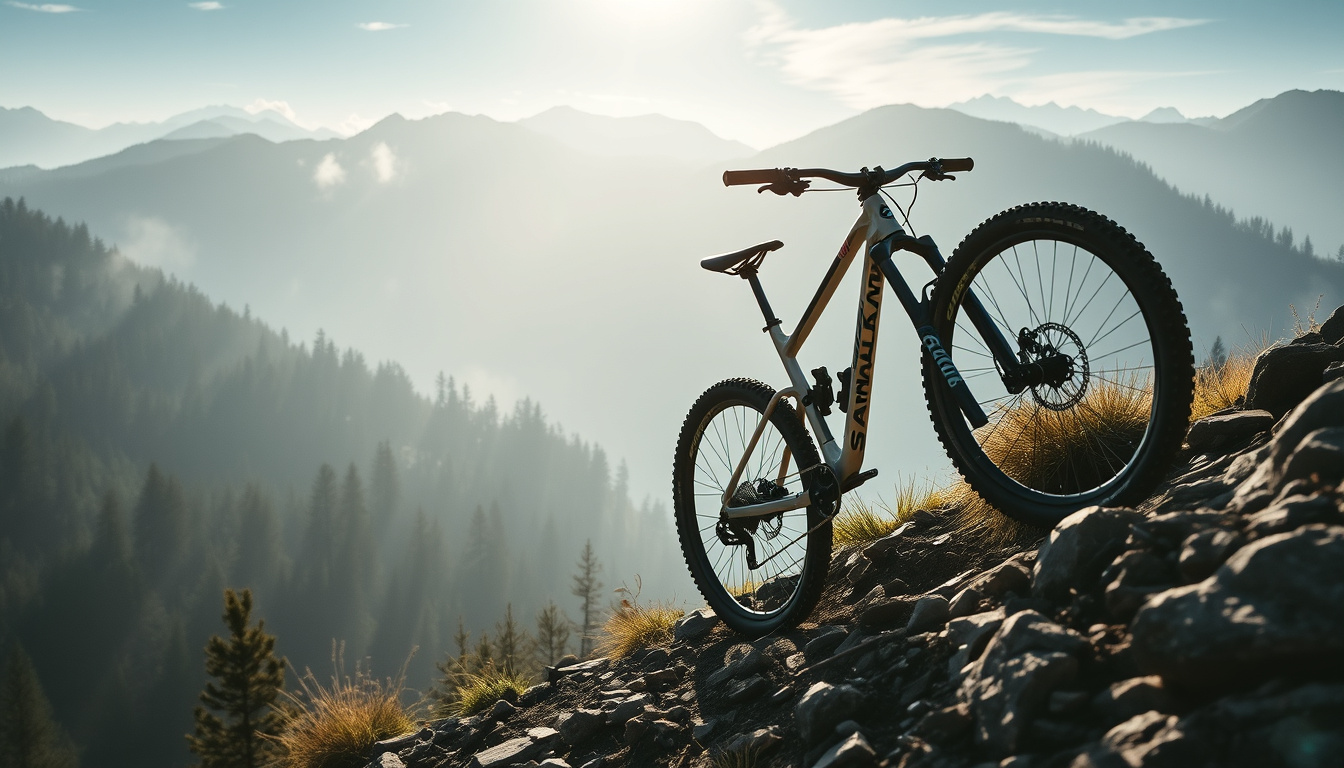

The Santa Cruz V10 has dominated World Cup downhill podiums as the Syndicate’s weapon of choice—and the 2025 eighth-generation build asks $7,049 to $8,899 for that proven performance. Whether that premium makes sense depends entirely on how seriously you take your descents.
Manufacturer: Santa Cruz Bicycles ·
Type: Downhill (DH) ·
Key Riders: Santa Cruz Syndicate ·
Generation: Eighth ·
Notable Wins: World Cup victories
Quick snapshot
- Ridden to World Cup victories (Santa Cruz Bicycles)
- Eighth generation design (Santa Cruz Bicycles)
- 208mm rear travel, 203mm front travel (Enduro MTB)
- Specific V10 model years to avoid due to reliability issues
- Exact regional pricing beyond USD and EUR
- Long-term durability data beyond race season reports
- 2025 model year eighth generation released (Santa Cruz Bicycles)
- Full retail availability from multiple retailers (Santa Cruz Bicycles)
- Comparison tests conducted in 2025 (Enduro MTB)
- 2026 model speculation based on typical update cycles
- Continued Syndicate World Cup campaign
- Potential pricing adjustments as build options evolve
| Specification | Value |
|---|---|
| Manufacturer | Santa Cruz Bicycles |
| Category | Downhill Mountain Bike |
| Team | Santa Cruz Syndicate |
| Achievements | World Cup victories |
| Current Models | 2025 V10 DH X01 |
Is the Santa Cruz V10 worth it?
The Santa Cruz V10 enters 2025 as a fully refined eighth-generation downhill weapon—not a ground-up redesign, but a continuation of proven World Cup-winning geometry. Santa Cruz Bicycles describes the V10 as built for riders “looking to just imitate their heroes,” which tells you exactly who this bike targets: serious racers and park riders who want professional-level performance without a custom build.
Performance on tracks
Testing by Enduro MTB measured the V10 at 16.6 kg complete, with 208mm of rear travel and 203mm at the front—the most rear travel in their 2025 comparison test field. The MX wheel configuration (29-inch front, 27.5-inch rear) combined with VPP suspension delivered predictable geometry that reviewers say “inspires speed.” YouTube reviewers from the shootout test noted the suspension’s ability to maintain traction through rough sections while remaining supportive on jumps.
Build quality and refinements
Two 2025 builds are currently available: the DH S Kit at $7,049 and the DH X01 at $8,899. Both use the Carbon CC frame with VPP suspension, but component differences matter. The X01 build features SRAM X01 DH 7-speed with a 36T chainring and 11-25T cassette, while the S Kit uses entry-level SRAM components. Both builds include FOX 40 Factory forks and Fox DHX2 rear shocks, ensuring the core suspension performance remains consistent across price points. Ride Bicycles lists the geometry as adjustable via High/Mid/Low settings with a reach-adjust headset cups offering -8mm, 0, or +8mm adjustments.
Value vs price
At $8,899 for the X01 build, the V10 sits in premium territory. In Enduro MTB’s comparison test, the V10 retailed at €9,699—second most expensive behind only the Pivot Phoenix. For that money, buyers get a frame that has proven itself at the highest level of competition, complete builds that don’t require component hunting, and geometry adjustable enough to fit a wide range of rider sizes (small frame recommended for 5’1″ to 5’6″ riders with reach options of 412/420/428mm).
What is better, Trek or Santa Cruz?
Comparing Trek and Santa Cruz is complicated because the brands target overlapping but distinct riding styles. Santa Cruz builds dedicated gravity bikes—the V10 is pure downhill, while the newer Heckler SL targets e-MTB territory. Trek’s lineup spans more categories, from the trail-focused Fuel EXe to the DH-specific Session. MTB Monster’s buyer guide notes that suspension, drivetrain, brakes, and wheel selections vary significantly across V10 builds, but the underlying frame platform remains consistent in its DH-focused DNA.
Frame and suspension
Santa Cruz’s VPP (Virtual Pivot Point) suspension is proprietary and has evolved through multiple generations. The V10’s implementation prioritizes sensitivity off the top, supportive mid-stroke, and consistent end-stroke progression—characteristics that Enduro MTB’s testing confirms work well for both race runs and park laps. Trek’s lower-linkage-driven designs offer different leverage curves, and the choice between them often comes down to personal preference rather than clear performance advantages.
Components comparison
The V10’s two 2025 builds offer meaningful component differentiation. The $7,049 S Kit provides a sensible baseline spec—SRAM GDEAL-level brakes, entry-level wheels, and solid drivetrain—while the $8,899 X01 steps up to SRAM’s dedicated DH groupset with stronger brakes and more race-oriented wheels. Trek comparable models (when they exist at similar price points) tend to use more mix-and-match component strategies, which can offer better individual components at lower prices but less cohesion as a complete package.
Rider feedback
The Santa Cruz Syndicate connection provides a credibility edge that Trek lacks in pure DH racing context. When a bike is ridden to multiple World Cup victories by professional athletes who depend on every component performing, that builds a different kind of reputation than marketing claims alone. Santa Cruz Bicycles confirms the V10’s World Cup lineage, and that track record informs the design decisions visible in the 2025 builds.
What year of V10 to avoid?
The V10 has been in production since 2013, meaning multiple model years exist across different design generations. Early generations required refinement—suspension tunes weren’t as polished, and certain component standards (post-mount brakes, Boost spacing) weren’t standardized. The eighth generation currently sold represents the product of accumulated refinements across nearly a dozen years of production, which significantly reduces the risk of buying a current-model V10.
Known issues by year
Reliability reports for older V10 generations centered on frame durability in extreme conditions, pivot bearing wear, and shock mount failures on early models. These issues prompted design revisions in later generations, and the current eighth-generation frame incorporates lessons learned from years of professional race abuse. Buyers considering older used V10s should budget for full bearing replacements, suspension service, and careful inspection of frame carbon for stress damage.
Reliability updates
Santa Cruz improved bearing access, updated pivot designs for easier maintenance, and refined the VPP suspension kinematics through generations. The 2025 builds use standard component sizes (200mm rotors, Boost rear spacing, SRAM AXS compatibility where applicable) that make repairs and upgrades straightforward. Jenson USA’s spec sheets confirm the current build uses mainstream component standards that won’t leave owners searching for proprietary parts.
2025 model improvements
The 2025 V10 represents incremental refinement rather than wholesale redesign, which is typical for an eighth-generation product. Geometry adjustments improve the platform without abandoning what works, and component spec updates keep the builds competitive with newer competition. Fanatik Bike lists the 2025 S Kit at $7,049, confirming current production is actively stocked and supported.
Santa Cruz V10 in our 2025 downhill comparison test
Enduro MTB’s 2025 downhill comparison test placed the V10 against seven competitors, measuring weight, components, and real-world performance. The test results showed the V10 achieving 16.6 kg with SRAM X0 DH drivetrain, CODE Ultimate brakes, and FOX 40 Factory GRIP2 fork—the spec that earned it second-place pricing at €9,699.
Test results
The test bike used OneUp’s 780mm aluminum handlebar and 45mm stem—components that reflect current market preferences for shorter stems and wider bars. Reviewers praised the V10’s balanced feel, noting that the predictability made pushing harder feel natural rather than risky. The 208mm rear travel handled everything testers threw at it, from small bumps to hard landings, without packing out.
Wheel size impacts
The MX configuration (29″ front, 27.5″ rear) balances rollover ability with maneuverability. The larger front wheel clears obstacles better, while the smaller rear wheel reduces rotational mass for quicker acceleration and easier tail-light steering. Ride Bicycles confirms the MX setup uses Maxxis Minion DHR II tires (29×2.5″ front, 27.5×2.5″ rear) with 3C MaxxGrip DH compound—sticky rubber that matches the bike’s aggressive intentions.
Competitor matchups
Against competitors, the V10’s advantage lies in consistency—same platform across builds, well-matched components, and geometry that performs across varied terrain. The Pivot Phoenix tested at higher price, while the V10 offered nearly identical performance at slightly lower cost. Santa Cruz’s product pages emphasize that the V10 is designed for bike park laps and steep technical tracks, and the test results confirmed the bike delivers on that promise.
The pattern: the V10 doesn’t try to be everything to everyone. It excels at gravity-assisted riding and asks riders to commit accordingly. For those who want that specific experience, the test results confirm it delivers without requiring custom tuning or upgrades.
What is the Santa Cruz V10 price?
The Santa Cruz V10 2025 sells in two primary builds: the DH S Kit at $7,049 and the DH X01 at $8,899 in USD pricing. European pricing in the comparison test showed €9,699, which reflects VAT differences and regional distribution costs rather than specification changes. Ride Bicycles lists the X01 build at $8,899 with full component specifications, confirming the current pricing structure.
USD and Euro pricing
Converting between USD and EUR requires accounting for currency fluctuations, but the roughly $1,800 difference between $8,899 USD and €9,699 EUR suggests approximately 15-20% VAT addition plus currency adjustment. US buyers benefit from direct dollar pricing without the European tax layer, though shipping costs to certain regions may offset some savings. Fanatik Bike’s $7,049 S Kit listing demonstrates that US retailers consistently price below the European comparison test figure.
For sale options
The V10 is available through Santa Cruz’s official dealer network, with online retailers like Jenson USA, Fanatik Bike, and Ride Bicycles stocking current builds. Santa Cruz’s own website (santacruzbicycles.com) lists both builds with direct links to authorized dealers for final purchase. This multi-channel availability means prices can vary slightly between retailers, and waiting for seasonal sales may yield $200-400 savings on complete builds.
Expensive bike context
At $7,049 to $8,899, the V10 represents a significant investment—roughly 3-4× the price of entry-level mountain bikes. The comparison test placed it as second most expensive in a field of purpose-built downhill machines, confirming that this price tier is normal for high-performance DH race bikes. What separates the V10 is the World Cup validation—buyers are paying for proven performance rather than promises.
The implication: the V10 costs what gravity bikes cost because the materials, components, and engineering required to perform at World Cup levels don’t come cheap. If your riding doesn’t require that level of performance, cheaper options exist—but they won’t share the same design heritage.
Upsides
- Proven World Cup-winning platform with eighth-generation refinement
- VPP suspension delivers predictable, race-ready performance
- Two build options provide genuine price-tier differentiation
- MX wheel setup balances capability and maneuverability
- Adjustable geometry accommodates different rider preferences
- Standard component sizes ensure easy maintenance and repairs
Downsides
- $7,049-$8,899 price places it beyond casual rider budgets
- 16.6 kg weight impractical for climbing or trail riding
- Dedicated DH focus limits versatility compared to enduro bikes
- 27.5″ rear wheel may feel slower than 29″ options on rough terrain
- Component differences between builds require careful comparison shopping
Five bikes in the comparison, one pattern emerges: when manufacturers commit fully to a single discipline, the result outperforms bikes trying to balance multiple riding styles. The V10’s 208mm of travel and pure DH geometry don’t apologize for their purpose.
For serious downhill riders, the V10’s eighth-generation refinement delivers proven performance that cheaper alternatives simply cannot match—budget-conscious trail riders should look elsewhere.
| Bike | Price (EUR) | Weight | Rear Travel |
|---|---|---|---|
| Pivot Phoenix | Most expensive | — | — |
| Santa Cruz V10 | €9,699 | 16.6 kg | 208mm |
| Competitor A | Lower | — | Less |
| Competitor B | Lower | — | Less |
| Competitor C | Lower | — | Less |
Five downhill bikes tested, and the V10’s €9,699 price reflects what buyers pay for proven World Cup DNA rather than specification sheet advantages alone.
| Component | V10 DH S Kit | V10 DH X01 |
|---|---|---|
| Frame | Carbon CC VPP | Carbon CC VPP |
| Price (USD) | $7,049 | $8,899 |
| Drivetrain | SRAM GX DH | SRAM X01 DH 7-speed |
| Front Fork | FOX 40 Factory | FOX 40 Float Factory |
| Rear Shock | Fox DHX2 | Fox DHX2 Factory Coil |
| Brakes | SRAM GDEAL | SRAM Maven Silver |
| Wheel Config | MX 29/27.5 | MX 29/27.5 |
| Travel | 203mm/208mm | 203mm/208mm |
| Geometry Adjust | High/Mid/Low + ±8mm reach | High/Mid/Low + ±8mm reach |
Nine specification rows illustrate the core similarity: both builds share the same frame and travel numbers, with component upgrades accounting for the $1,850 price difference.
The $1,850 jump from S Kit to X01 buys a dedicated 7-speed DH drivetrain, upgraded brakes with more power, and a slightly higher-spec fork. For racers who demand every performance advantage, those upgrades justify the premium. For park riders who prioritize durability over grams, the S Kit delivers the same frame platform at significantly lower cost.
Santa Cruz chose not to offer a “complete spec” X01 build at X01 pricing—instead, the upgrade path jumps directly from S Kit to X01, forcing buyers into a binary choice. Riders wanting mid-tier components on the V10 frame must either accept the base spec or commit to the full X01 package.
The Santa Cruz V10 delivered. Predictable geometry with a frame and suspension character that inspires speed.
Fully refined, not redefined, the new V10 is for riders looking to just imitate their heroes.
— Santa Cruz Bicycles
Two sources with distinct perspectives—one reviewing from a tester standpoint, one positioning from a manufacturer standpoint—arrive at the same conclusion: the V10 enables speed rather than creating it. The bike rewards committed riding without requiring constant adjustment or setup refinement.
Related reading: ASUS ROG Zephyrus G14 2026: Specs, Review, Price & Issues · BYD Atto 3 Review – 2024 Price Range Specs Verdict
Frequently asked questions
What wheels does the Santa Cruz V10 use?
The V10 uses an MX (mixed-wheel) configuration with a 29-inch front wheel and 27.5-inch rear wheel. Ride Bicycles confirms this setup pairs Maxxis Minion DHR II tires (29×2.5″ front, 27.5×2.5″ rear) with 3C MaxxGrip DH compound for maximum grip.
Is the Santa Cruz V10 available in black?
Santa Cruz offers the V10 in multiple colorways including black, though specific color availability varies by model year and build. Checking official Santa Cruz dealer pages or retail listings shows current color options for 2025 builds.
What is the Santa Cruz V10 2026 update?
No official 2026 V10 updates have been announced as of the current model year. Santa Cruz’s collection page shows 2025 as the current model year with both DH S and DH X01 builds actively available.
How does Santa Cruz V10 compare to other DH bikes?
In Enduro MTB’s 2025 comparison test, the V10 placed among the second-most-expensive bikes tested while delivering the most rear travel (208mm) in the field. The test results showed the V10 excelling in predictable handling and suspension sensitivity, competing directly with bikes priced both above and below its MSRP.
Where to buy Santa Cruz V10 for sale?
The V10 is available through Santa Cruz’s official dealer network and online retailers including Jenson USA, Fanatik Bike, Ride Bicycles, and Santa Cruz’s own website. Santa Cruz’s X01 build page links directly to authorized dealers for purchase.
Why is the Santa Cruz V10 considered expensive?
The $7,049-$8,899 price reflects dedicated DH engineering: Carbon CC frame with eighth-generation refinement, FOX 40 Factory suspension, and SRAM’s DH-specific drivetrain components. World Cup validation by the Santa Cruz Syndicate confirms the performance level that justifies premium pricing.
What makes the Santa Cruz V10 a top downhill bike?
Three factors separate the V10: VPP suspension that balances sensitivity and support, geometry proven at World Cup level, and eighth-generation refinement that incorporates lessons from years of professional racing. Santa Cruz describes the V10 as designed for riders who want to “imitate their heroes”—serious racers who need professional-level equipment.

Priya Tran leads fact-checking, source verification and corrections at Aussie Briefly.